Early-Onset Cancers Are on the Rise. Knowing Your Family History Is Crucial.
0:00 0:00 Produced in partnership with: Listen in and play along as hosts Cara Anthony and Blake Farmer test their knowledge with a HealthQ quiz on detecting early-onset cancers. Bryce Ramsey of Madison, Mississippi, was 33 when she was diagnosed with colorectal cancer. Upon noticing blood in her stool, she blamed the hemorrhoids she’d developed after delivering her son eight years earlier. Ramsey didn’t initially link her symptoms to cancer. “But I had just kind of made a deal with myself because the blood was starting to become more frequent,” she said. “I was like, ‘If this happens the next time I go to the bathroom, I’m going to make a call.’” She saw more blood, and she reached out to a gastrointestinal clinic to get it checked out, just in case. Her doctor said she normally wouldn’t scope someone Ramsey’s age, “‘but something in my gut is just telling me I need to do so,’” Ramsey recalled. “And thank God she did because she found a 5-centimeter polyp.” Ramsey had surgery, endured chemotherapy, and survived stage 3 colon cancer. Now 40, she volunteers for the Colorectal Cancer Alliance, a nonprofit advocacy group, to raise awareness of early-onset colorectal cancer. Stories like hers are becoming increasingly common: In the U.S., more than a dozen kinds of cancer are on the rise in adults under 50. Among these early-onset cancers, colorectal and breast cancers have increased the most, and colorectal cancer is now the deadliest cancer for Americans ages 18 to 49. Here’s what to know about detecting early-onset cancers. 1.Family history is one of the most important risk factors. Researchers have not been able to find a single cause for the rise in early-onset cancers. Instead, research suggests a myriad of factors play a role, including obesity, heavy alcohol use, environmental factors such as microplastics, and disruptions to gut health. Doctors generally follow population-level guidelines for routine screenings — such as recommending mammograms starting at age 40 to screen for breast cancer — but physicians might recommend some patients get screenings as early as in their 20s. Doctors weigh a patient’s personal risks, including their family history of cancer. Ramsey learned only after her diagnosis that her grandfather previously had colorectal cancer. “If I would’ve known that I had a significant family history, I would’ve been scoped a lot younger,” she said. “My doctor said my tumor had probably been growing for seven to 10 years.” After her diagnosis, she encouraged her father, aunt, and brother to get screened. All three were diagnosed with colon cancer, too, and survived after receiving treatment. Ramsey said it can be uncomfortable to urge family members to get tested or to talk with them about private health information, but those conversations are worth having to save a life. “Just ask the question or make a joke about it. And sometimes just little icebreakers will help,” she said. 2.Report unusual symptoms as quickly as possible. Being vigilant about unusual body changes or symptoms — and reporting those to your physician — gives doctors the information they need to determine your personal risk for cancer. “For example, a lump in the breast, abdominal pain, changes in bowel habits that really are not going away,” said oncologist Veda Giri, director of the Early Onset Cancer Program at Yale Cancer Center. “Certainly blood in the stools. Sometimes even symptoms such as unusual fatigue that doesn’t seem to go away.” “It’s incredibly important to bring symptoms to your doctor,” Giri said. 3. Talk, then test, then talk again. Ads for at-home cancer tests are everywhere, so you might be tempted to use a screening kit instead of going in for an office visit or a standard screening, like a colonoscopy. But not all tests are created equal, Giri said. It can be hard for laypeople to understand the accuracy of at-home screening kits, so they should talk to their doctor first. “Some of these tests could lead to a false sense of either reassurance or false anxiety and alarm,” she said. For people who decide to move forward with an at-home test, experts say they still need to consult with a physician. If you get any sort of abnormal result, your doctor is going to want to follow up with additional testing, such as a colonoscopy. Sharing your results, regardless of outcome, will help inform your care. People and Policy The U.S. Preventive Services Task Force recently changed the recommended age for women to begin mammogram screenings for breast cancer from 50 to 40. But there’s a difference of opinion among national advocacy and medical groups about whether regular screenings should happen every year or every other year. In 2021, the same task force lowered the recommended age to 45 for a first colonoscopy for colon cancer detection for people with average risk. Establishing a relationship with a trusted medical practitioner can help patients assess personal risk and sort through new information as research and public health guidance evolve. If you feel uncertain about your personal risk for cancer or when you should start cancer screenings, one of the best ways to advocate for your health is to establish a relationship with a medical practitioner you trust and ask specifically about your cancer risk. You can also ask to consult with a genetic cancer risk specialist, a type of medical provider who helps patients evaluate their cancer risk, often with genetic testing. This installment is part of HealthQ’s reporting on caregiving among the sandwich generation. For more, check out the series archive. Katherine Ruppelt and Emily Siner at Nashville Public Radio contributed to this report. HealthQ is a health series from reporters Cara Anthony and Blake Farmer, approachable guides to an unapproachable healthcare system. It’s a collaboration between Nashville Public Radio and KFF Health News. This <a target="_blank" href="https://kffhealthnews.org/news/healthq-early-onset-cancers-family-history/">article</a> first appeared on <a target="_blank" href="https://kffhealthnews.org">KFF Health News</a> and is republished here under a <a target="_blank" href="https://creativecommons.org/licenses/by-nc-nd/4.0/">Creative Commons Attribution-NonCommercial-NoDerivatives 4.0 International License</a>.<img src="https://kffhealthnews.org/wp-content/uploads/sites/8/2023/04/kffhealthnews-icon.png?w=150" style="width:1em;height:1em;margin-left:10px;"> Download Speed Embed this player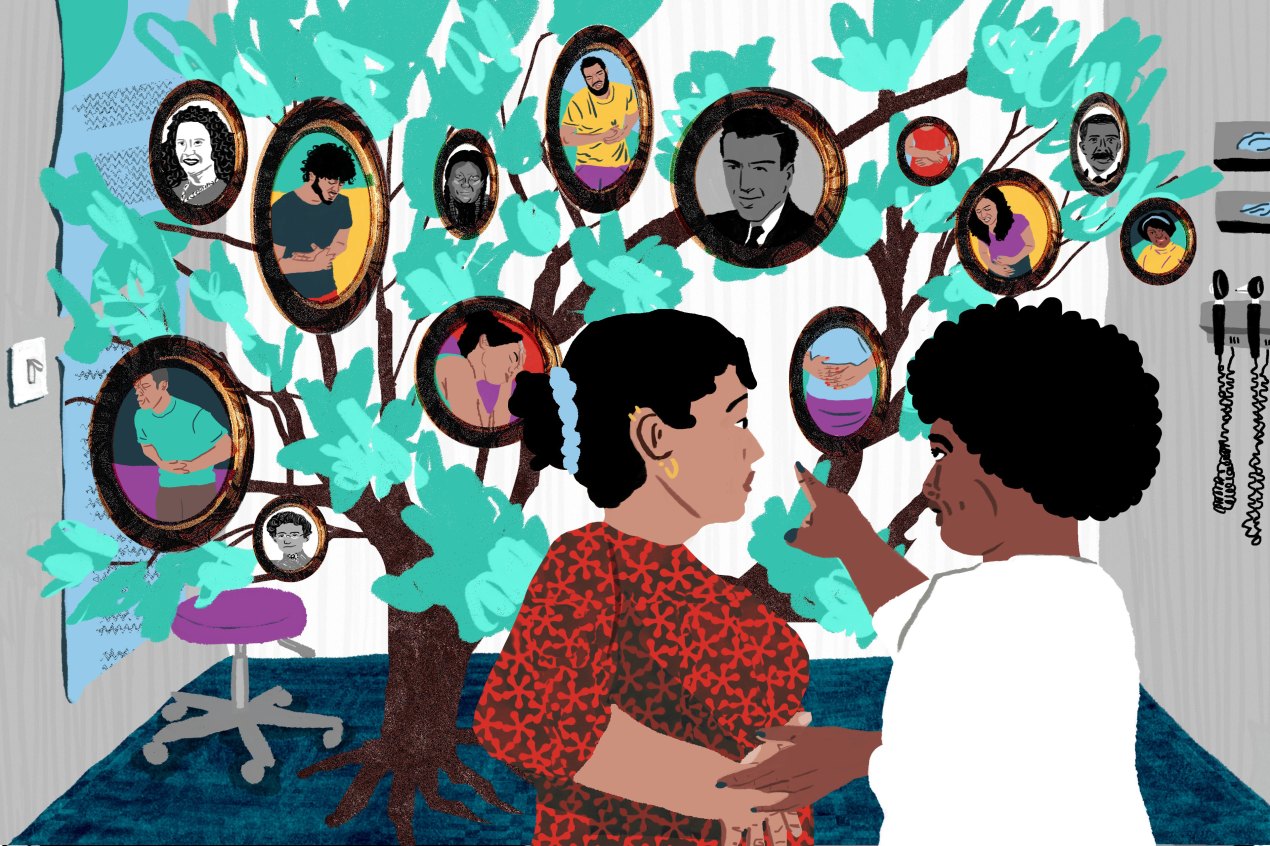
Related Articles
-
Here's how much the Iran war cost -- and how its effects will linger
-
Kim Dacres Sculpts Resilience in Rubber
-
10 Art Shows to See in DC This Summer
-
Iran: Deadly drone strikes on Bahrain and Saudi Arabia may constitute war crimes – new research
-
Trump settles for Iran deal that falls short of his promises
-
Want a deal on a heat pump? Team up with your neighbors.
- Latest Articles
-
- Analysis: Solar overtakes gas power in Asia for first time ever
- Trump administration repeals rule that allowed bison to graze on public lands
- In a Volatile Market, Art Basel Galleries Bet on Our Attention
- Alexandria Signs With Warner Music Australia, Warner Records: Exclusive
- Claire Valdez Is Making All the Right Enemies
- Jackie Tohn & Timothy Simons On ‘Nobody Wants This’ Filming In LA & Why It’s So Important: “The Infrastructure Already Exists”
- Illegal miners adapt their strategies in Yanomami Amazon territory
- Iran: Deadly drone strikes on Bahrain and Saudi Arabia may constitute war crimes – new research
- AI will lead to labour shortages, Amazon’s Jeff Bezos says in optimistic talk
- If Only America Could Get Out of Its Own Way….
- Random Reads
-
- DNA from hunter-gatherer teeth reveals secrets of ancient plague
- Cropped 17 June 2026: Coral reef ‘hope’ | Ocean talks | Plant flowering times ‘shift’
- Save Over 60% Off the ThermoMaven X2 Wireless Meat Thermometer for Father's Day, Now Just $39.99
- The Dreame A3 AWD Pro Robot Lawn Mower Is The Perfect Gift for Father's Day
- Sooner than expected? Useful quantum error correction promised for 2028.
- Alabama Governor Names Four New PSC Members, Including Its First Two Black Appointees
- After 24 years, Bleach is officially entering its final era
- Ben Stiller Sets NY Knicks Doc Series With A24, HBO and the NBA After Championship Win
- Biden, Bush, Clinton slated to attend Obama presidential center opening
- The Art Heist That Had It All—Monet, the Mafia, and Millions—Is Now a Docuseries
- If Only America Could Get Out of Its Own Way….
- Forza Horizon 6 explodes on Steam even before it's officially out
- Privacy own-goal: World Cup blunder leaks Lionel Messi’s passport details
- Vince Staples Addresses Theory That ‘Cry Baby’ Artwork Represents Donald Trump: ‘I See a Lot of Conversation’
- ‘Survivor’ Animated Movie in the Works From Paramount Animation, Jeff Probst to Exec Produce (EXCLUSIVE)
- JetBlue Pushes Deeper Into Fort Lauderdale, Shrinks in Newark and LaGuardia
- Trump blows through his red lines to justify interim peace deal with Iran
- Fired Rockstar developers can bring blacklisting claims against the GTA 6 developer, UK tribunal rules as final trial looms
- Fired Rockstar developers can bring blacklisting claims against the GTA 6 developer, UK tribunal rules as final trial looms
- Stingless bees in Peru become the first insects with legal rights. Will it happen globally?
- Search
-
- Links
-
- Ex-Spain PM Zapatero Faces Court in Corruption Hearing
- World Cup quick hits: Star whacks US pundit and Mabil's heartwarming moment
- Satellite Imagery Shows Ongoing Demolitions Across Southern Lebanon
- Brazil: Ex-President Bolsonaro's Son Sentenced to Four Years over U.S. Lobbying
- BBC to cull 550 jobs in latest bid to cut costs amid 'very uncertain times'
- USA legend Charlie Davies reacts to Mike Grella sledging the Socceroos
- England redeemed by new boys after week of scandal
- Bailey’s Law receives royal assent, brings reform to intimate partner violence laws
- World Cup LIVE: Raging Cristiano Ronaldo storms off as BBC break golden rule
- World Cup quick hits: Star whacks US pundit and Mabil's heartwarming moment